Reset kitchen appliance zones so counters work harder and safer
Use actual cooking routines, electrical capacity, heat, weight, and cleaning access to decide what belongs on the counter.

Counter clutter is often a workflow problem. Appliances migrate out because they are used daily, lack a safe storage location, or are too heavy to retrieve comfortably. The answer is not automatically more bins or a new countertop.
Heat-producing appliances, knives, cords, outlets, and heavy objects deserve a safety-first layout. Follow each appliance manual and do not overload outlets or use extension cords as permanent kitchen wiring.
The short answer
A functional kitchen counter keeps daily tools close, leaves prep space open, and respects heat, cords, outlets, and cleaning access. Storage is successful when it reduces risky movement, not when every appliance disappears.
Make a one-week counter log
List tools left out, when they are used, where they are plugged in, and what makes cleanup difficult. Include coffee, food prep, baking, child needs, and accessibility.
Sort into daily, weekly, and occasional
Give daily tools a safe, reachable home; weekly tools a nearby cabinet; and occasional tools a labeled storage zone. Keep only the category that earns permanent counter space.
Set a protected prep and landing zone
Choose a clear counter near water and cooking areas that remains available for raw and cooked food workflow. Avoid placing hot or plugged-in tools where handles or cords reach an edge.
Check outlets and equipment instructions
Read appliance wattage and manual guidance, inspect damaged cords, and use outlets as designed. Repeated tripping, warm outlets, or damaged receptacles require electrical service—not a power strip workaround.
Store by safe retrieval
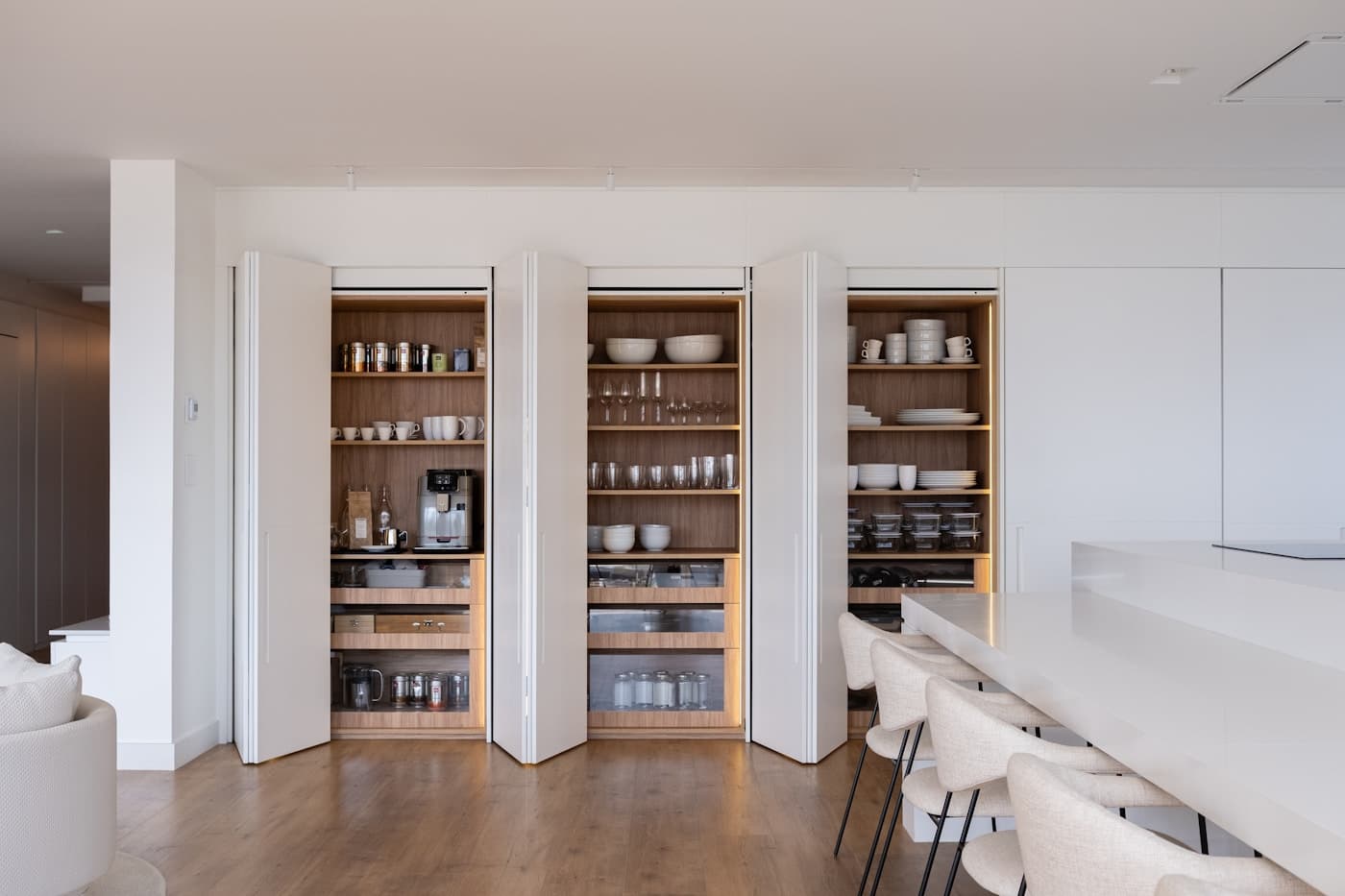
Put heavy appliances where they can be lifted without twisting or reaching above shoulder height. Use drawers or shelves that do not bind, and anchor any tall adjacent storage.
Test cleanup and reset
After several meals, check whether the arrangement preserves cleaning access, handwashing space, and a clear path. Change one zone at a time rather than buying a full organization system before the workflow is proven.
Put the guide to work
Field notes
- Track actual use
- For one week, note which tools are used daily, weekly, and rarely. Do not plan from an aspirational cooking routine.
- Protect prep space
- Leave a clear, well-lit zone near sink and primary work area instead of treating every horizontal surface as storage.
- Respect heat and cords
- Keep hot appliances away from cabinets, combustible items, water, and edge hazards; route cords so they do not cross work or walking paths.
- Plan lifting
- Place heavy appliances at a reachable height and avoid carrying them across a crowded kitchen while hot or plugged in.
Make the next step useful
Put this guide on your home plan
Know when to call a professional. Stop if work involves active gas leaks, damaged service wiring, structural movement, unsafe heights, suspected contamination, or a problem you cannot confidently isolate.
Editorial review and sources
Reviewed by: Smart Homeowners Editorial Desk
Last reviewed: August 26, 2026
Original Smart Homeowners editorial; not adapted from a third-party article.